Yvonne Rudellat, the SOE’s First Woman in the Field
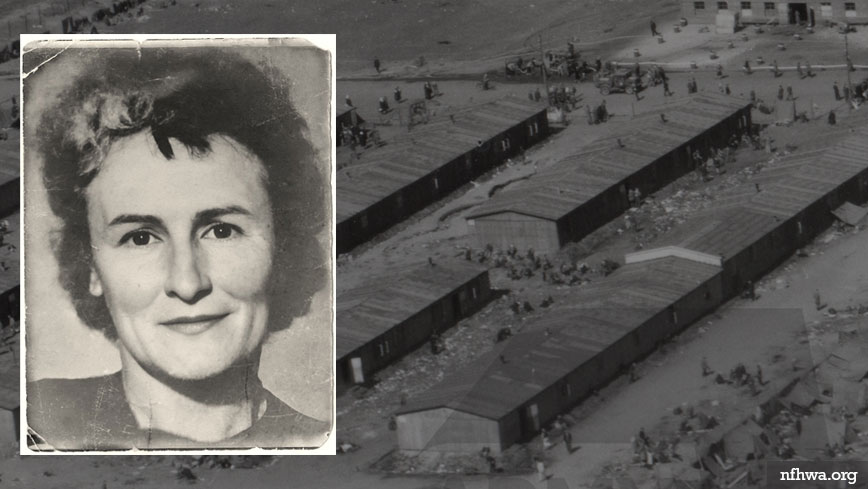
In the summer of 1942, a 45-year-old hotel secretary walked out of a requisitioned house on the Beaulieu Estate and into history. She received part of her training in the New Forest and became the first woman the Special Operations Executive sent into occupied France as a trained agent. This is Yvonne Rudellat’s incredible, yet tragic story.
A Frenchwoman in London
Yvonne Claire Cerneau was born on 11 January 1897 at Maisons-Laffitte, near Paris. She was the daughter of a horse dealer who supplied the French army. She was one of ten children born to the family, but one of just two to survive – eight older siblings died in infancy. Whether her childhood shadowed by loss helped forge the resilience she would show during her wartime service, I can only speculate on.
After her father’s death she found life with her mother difficult and moved to London. In 1920 she married Alex Rudellat, an Italian-born waiter at the Piccadilly Hotel. Their daughter, Constance Jacqueline, was born in 1922, but sadly the marriage did not last.
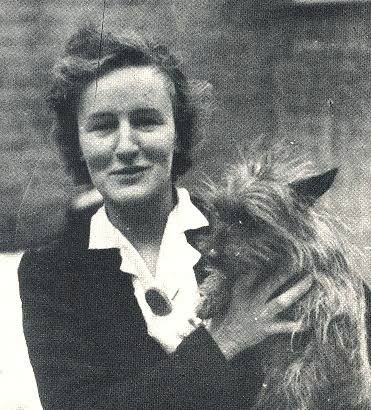
By the outbreak of war Yvonne was working at Ebury Court, a small hotel and club near Victoria. She was, to all appearances, entirely unremarkable: a middle-aged, grey-flecked hair, and quietly spoken. Her daughter Constance joined the ATS days after war was declared in September 1939, yet Yvonne herself tried repeatedly to enlist in the forces but was turned down on account of her age.
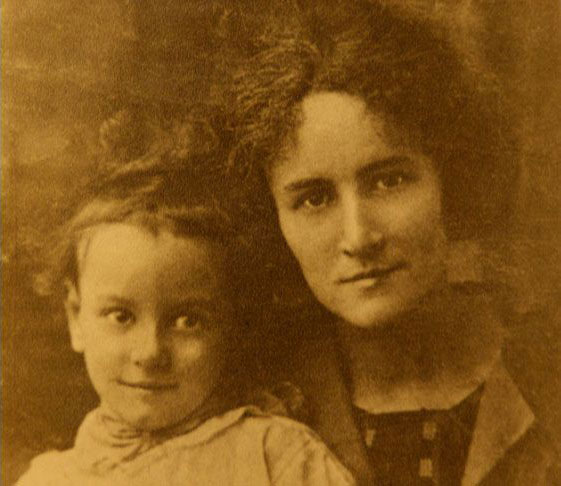
But she was determined. Distressed by the fall of France, she told people how she wanted to return and “do something for France”, and this didn’t go unnoticed. Among the clientele of Ebury Court and of a Gaullist-run pâtisserie she would go to near Baker Street, were officers of the SOE – the Special Operations Executive. The SOE had been formed in July 1940 on Churchill’s instruction to “set Europe ablaze.” Word of this passionate Frenchwoman reached Captain Selwyn Jepson, a recruiting officer for SOE’s French (F) Section – and also the man who recruited Noor Inayat Khan. He interviewed Yvonne, and on 15 May 1942, at the age of 45, she was accepted into SOE.
The ‘Finishing School for Secret Agents’ in Beaulieu
Yvonne Rudellat’s training followed the standard F Section routine. A preliminary assessment took place at Wanborough Manor near Guildford; paramilitary training followed at Garramor, near Morar in the West Highlands. In Scotland she was trained using assault courses and learned small arms and explosives under instructors including the future naturalist and author Gavin Maxwell.
Her final training was delivered in the New Forest. Rudellat was posted to Boarmans, one of twelves grand homes on requisitioned by the SOE on the Beaulieu Estate. The training houses were known as Group B. and are often referred to as the “Finishing School for Secret Agents”. Scattered discreetly across the Montagu estate, these houses taught the final part of an agent’s preparation before being sent into occupied Europe. At Boarmans in Beaulieu, Yvonne Rudellat learned to live clandestinely under a false identity in enemy territory, plus the essentials of acourier, including ciphers, the use of boîtes aux lettres (dead letter boxes) for passing messages securely, and, crucially, how to resist interrogation.
She finished SOE training in Beaulieu on 21 June 1942. However, she had a big disappointment – despite her wish to be parachuted into her homeland of France, she was judged too old for parachute training. Instead of the drop into France by air that she had dreamed of, she would have to go in by sea.
The first female SOE agent sent into France
On 18 July 1942 Yvonne Rudellat flew to Gibraltar with three male SOE agents, travelling under the temporary cover name of Jacqueline Viallet. From Gibraltar she crossed the western Mediterranean aboard a wooden sailing boat named Seadog, operated for SOE’s clandestine sea lines. Twelve days later, on 30 July 1942, she was landed by rowing boat on a beach near Cannes. As she stepped back onto French shores, she quietly became the first female SOE-trained agent inserted into France. (The remarkable American Virginia Hall was already in Vichy France, but had entered legally under journalistic cover rather than as a trained SOE infiltration.)
Her field name was “Jacqueline” and chosen after her daughter. She was given the cover identity Jacqueline Gautier, a surname picked because it was common enough to attract little attention in France. To reach her operational area she travelled from Cannes to Lyon and then towards Paris, at one point crossing the demarcation line between the zones hidden in the coal tender of a locomotive.
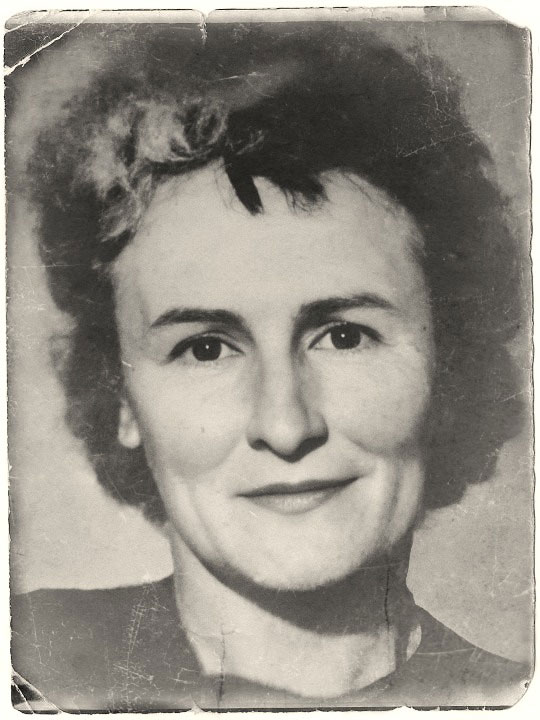
Courier and saboteur work in the Loire
Rudellat based herself around Tours, working first with the Monkeypuzzle circuit and then, after difficulties with its organiser, joining forces with a French agent, Pierre Culioli. Posing as a married couple, the two ran the Adolphe sub-circuit in the Sologne, operating under the umbrella of Francis Suttill’s great Physician network which is better known by Suttill’s own codename, Prosper. It was the largest SOE circuit in France.
For nearly a year “Jacqueline” was in constant motion: cycling long distances through the Loire valley carrying messages, money and compromising material; scouting and managing landing grounds; and receiving the parachute drops of agents, arms and explosives on which the Resistance depended. She also took part directly in sabotage, including the attack on the power station at Chaingy near Orléans, and personally blew up two railway locomotives.
M.R.D. Foot, SOE’s official historian, remembered her as possessing steady nerves and good sense beneath a deceptively vague manner, and noted that by mid-1943 she was fast becoming an expert in demolitions. She was a middle-aged grandmother by this time, as her daughter Constance had had a baby, and was among the most effective agents in the field.
The roadblock at Dhuizon
By June 1943 the Sologne was becoming a dangerous place. On the night of 12 and 13 June a container in a parachute drop received near Neuvy exploded, killing members of the reception committee and bringing hundreds of German troops into the district. Checkpoints sprang up across the region, but Suttill insisted the air operations continue.
On the night of 15 and 16 June two Canadian agents, Frank Pickersgill and John Kenneth Macalister, parachuted into the Sologne to establish a new circuit. Culioli and Rudellat received them, and on 21 June set out to drive them towards a train for Paris. In the village of Dhuizon they were stopped at a German checkpoint. The two Canadians were ordered out of the car; Culioli and Rudellat, their papers in order, were passed through to the mairie (town hall) and cleared and but waited outside in case their Canadian passengers were released.
Instead there were shouts for them to return. Culioli accelerated away in the car, with German vehicles hot in pursuit. In the chase that followed, Rudellat was shot in the head; near Bracieux, some ten kilometres on, the car struck a barricade and crashed into a wall. Culioli and Rudellat were captured. Pickersgill and Macalister, taken with a briefcase of messages and spare radio crystals, would ultimately be murdered at Buchenwald concentration camp.
The ‘Night and Fog’ decree by Hitler
Yvonne Rudellat was carried unconscious to the hospital at Blois, where the French surgeon, Dr Luzuy, found that the bullet had lodged in her head without fatally penetrating the brain. Judging removal too dangerous, he left it in place. She would carry a German bullet in her skull for the rest of her life – which would now become short.
Resistance plans to spirit her out of Blois came to nothing when she was moved to the Hôpital de la Pitié in Paris. German attempts at interrogation foundered completely on her confusion. Whether this was genuine, exaggerated, or an artful blend of the two, it yielded them nothing. In late September 1943, still gravely ill, she was transferred to Fresnes prison and classified Nacht und Nebel – “Night and Fog,” the Reich’s designation for prisoners marked to vanish into Germany without trace.
At Fort de Romainville in the summer of 1944, due to the injuries sustained, it’s believed she was uncertain what her own surname was. She accepted a fellow prisoner’s suggestion and adopted the common name Gautier. By an extraordinary coincidence, or perhaps it was a flicker of buried memory, Gautier was the same cover name under which she had entered France two years earlier.
Deported to Ravensbrück concentration camp (a camp exclusively for women) that summer, she wore the red triangle of a political prisoner. Women from the Prosper circuit recognised her there and tried to make contact, but she seemed not to know them, insisting she was someone else. The anonymity Beaulieu had trained her to maintain, and the injury had made real, now cloaked her completely.
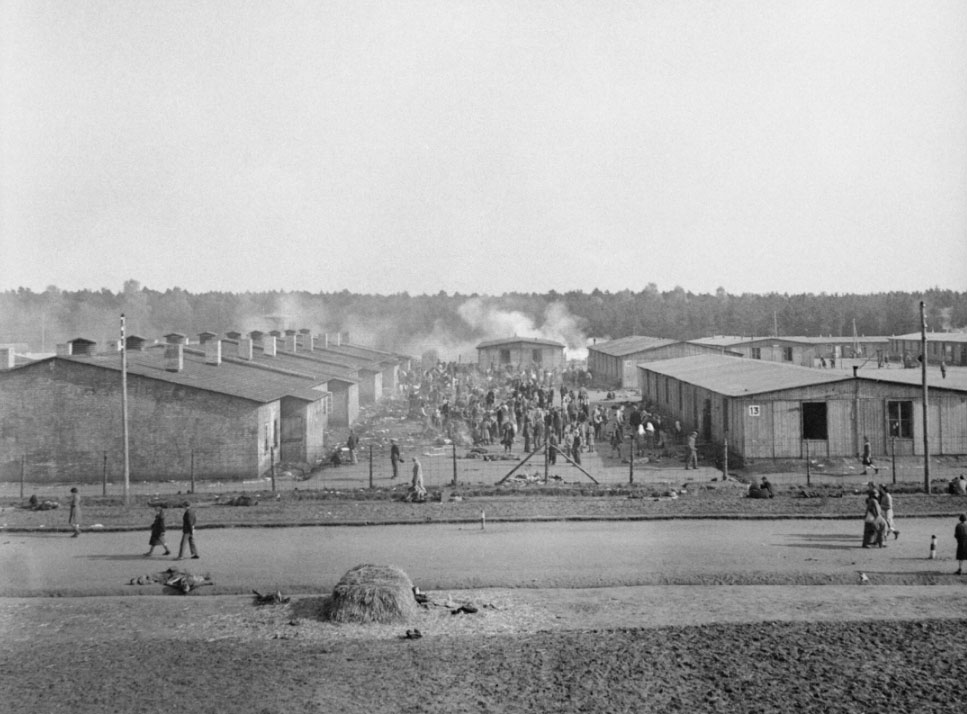
Bergen-Belsen concentration camp
In early 1945, perhaps due to the same confusion, Yvonne Rudellat became mixed up with a group assembled for transport and on 2 March 1945 arrived at Bergen-Belsen. The concentration camp was in the midst of a typhus epidemic that killed some 20,000 prisoners in that single month. She contracted typhus and dysentery and grew desperately weak. The British army liberated the camp on 15 April 1945, but for thousands, including Yvonne, liberation came too late…
Rudellat died on 23 or 24 April, shortly after being moved to the hospital established beside the camp, and was buried in a mass grave with 5,000 other prisoners, and still under the assumed identity name of Gautier.
No one at Bergen-Belsen knew who she was. Her fate remained a mystery until July 1946, when Vera Atkins, F Section’s intelligence officer, tracing SOE’s missing agents across the of Europe, found a former Belsen prisoner who remembered a Frenchwoman called Jacqueline Gautier. Only then did London learn what had become of its first woman in the field.
Remembering Yvonne Rudellat
Yvonne Rudellat was posthumously appointed MBE and awarded the French Croix de Guerre; she had earlier been recommended for the Military Cross, for which, as a woman, she was ineligible. She is commemorated on the SOE memorial at Valençay to the 104 F Section agents who died for the liberation of France, on the memorial obelisk at Romorantin in the Sologne where she served, and on the FANY memorial at St Paul’s Church, Knightsbridg in London. Her SOE personal file is held at The National Archives, Kew, under reference HS 9/1289/7.
Her fullest memorial, though, is Stella King’s meticulous 1989 biography Jacqueline: Pioneer Heroine of the Resistance, which rescued her story from obscurity.
And here in the New Forest we have a memorial of a different kind: the home she trained in. The house called Boarmans still stands on the Beaulieu Estate, and the abbey cloisters carry the plaque to the secret agents trained in the estate houses.
Yvonne Rudellay was a small Frenchwoman of 45 whom nobody ever really suspected. She cycled around the Loire with explosives in her basket, didn’t give up her secrets to the Gestapo, and died nameless and free, three weeks short of the end of the Second World War.
Credits & references
- The National Archives (TNA), HS 9/1289/7, SOE personal file of Yvonne Claire Rudellat, née Cerneau; Stella King, Jacqueline: Pioneer Heroine of the Resistance (London: Arms & Armour Press, 1989).
- King, Jacqueline; “Yvonne Rudellat,” Wikipedia (accessed September 2026).
- King, Jacqueline; Commonwealth War Graves Commission (CWGC), “The First Woman SOE Sent into France,” For Evermore: Stories of the Fallen, cwgc.org.
- On SOE’s Group B schools at Beaulieu see Cyril Cunningham, Beaulieu: The Finishing School for Secret Agents(Barnsley: Leo Cooper, 1998); for Rudellat at Boarmans, King, Jacqueline.
- King, Jacqueline. Her TNA file records the alias “Jacqueline Vialliot” (HS 9/1289/7).
- On the felucca Seadog and SOE’s Gibraltar-based sea lines see Brooks Richards, Secret Flotillas (London: HMSO, 1996); King, Jacqueline.
- Foot, SOE in France; “Yvonne Rudellat,” Wikipedia.
- Alan Malcher, “SOE Agent Yvonne Rudellat,” alanmalcher.com (2021).
- Foot, SOE in France; Francis J. Suttill, Shadows in the Fog: The Prosper Network Betrayed (Stroud: The History Press, 2014).
- Foot, SOE in France; CWGC, “The First Woman SOE Sent into France.”
- Findagrave memorial 66435581, Yvonne Rudellat, citing sabotage of the Chaingy power station and the destruction of two locomotives; see also Foot, SOE in France.
- “Timeline of SOE’s Prosper Network,” Wikipedia; Suttill, Shadows in the Fog.
- Foot, SOE in France; Suttill, Shadows in the Fog; “Timeline of SOE’s Prosper Network,” Wikipedia. On Pickersgill and Macalister see Jonathan Vance, Unlikely Soldiers (Toronto: HarperCollins, 2008).
- Sarah Helm, A Life in Secrets: Vera Atkins and the Lost Agents of SOE (London: Little, Brown, 2005); King, Jacqueline.
- Prabook / King, Jacqueline; London Gazette entries for her posthumous MBE.
- Findagrave memorial 66435581; on the Valençay memorial see soe-france.org and Foot, SOE in France (rev. edn).
- TNA, HS 9/1289/7 (catalogue entry: “SOE Agent Yvonne Rudellat aka SUZANNE network PHYSICIAN France,” 1942–1943).